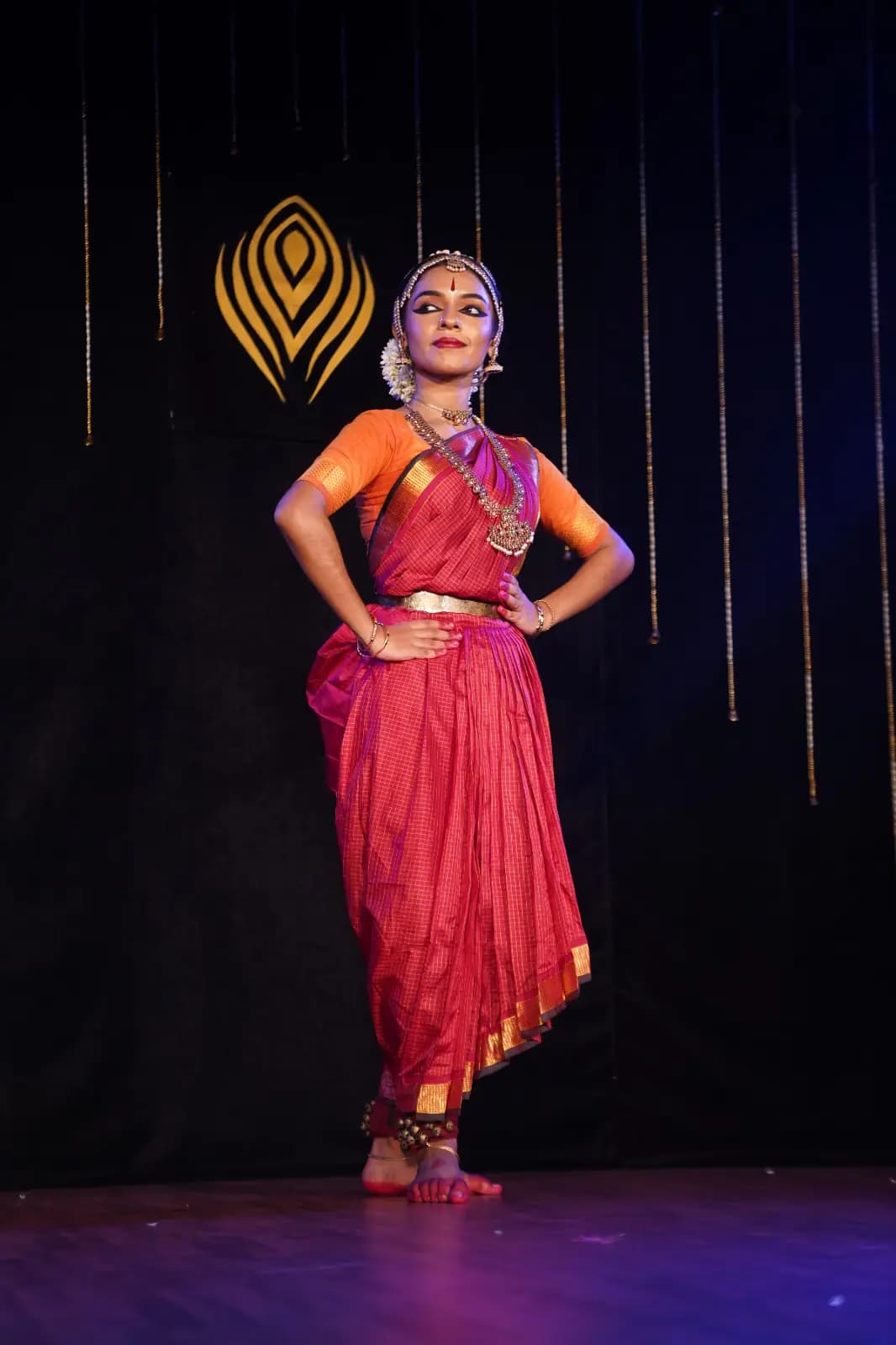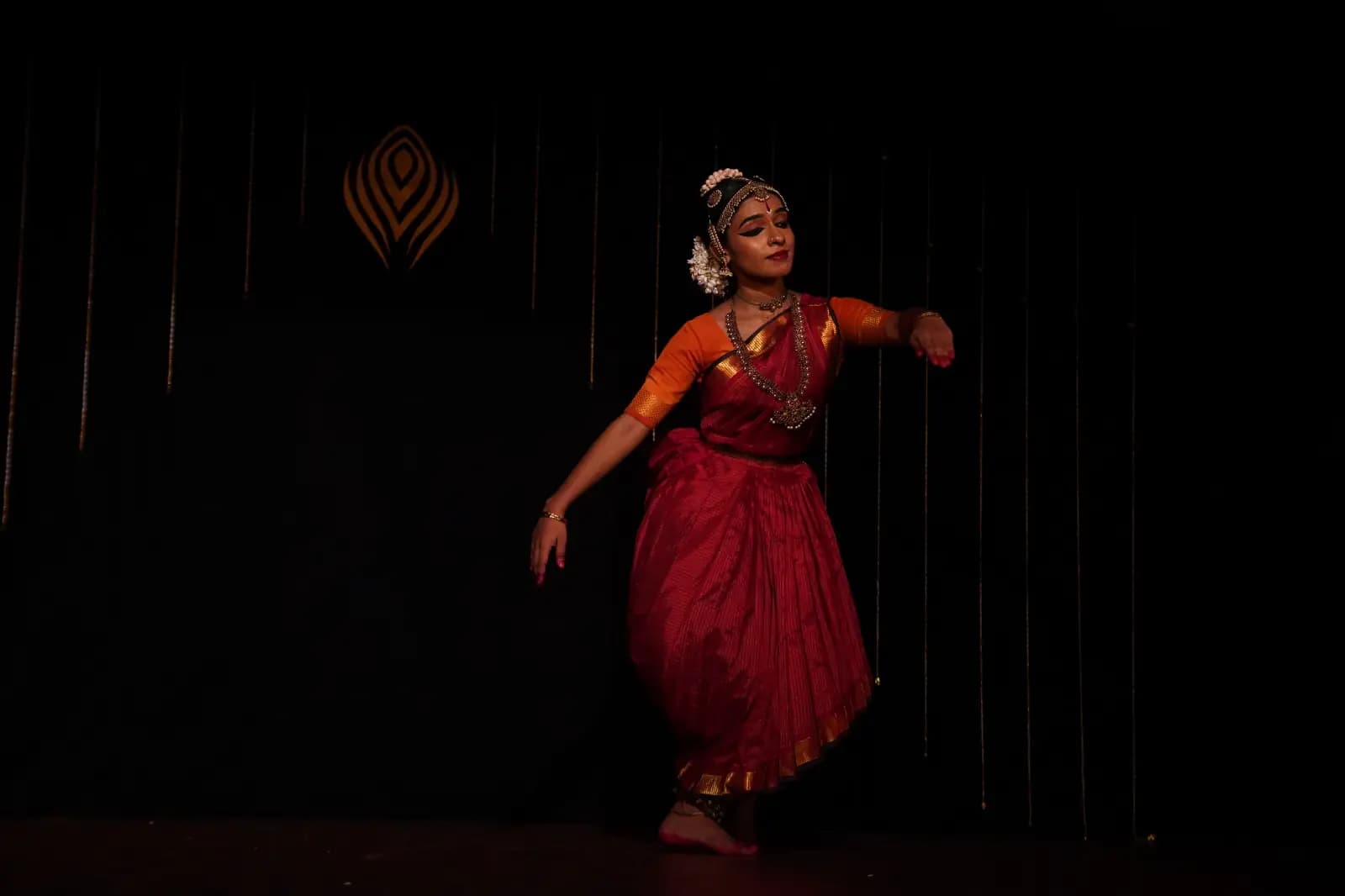
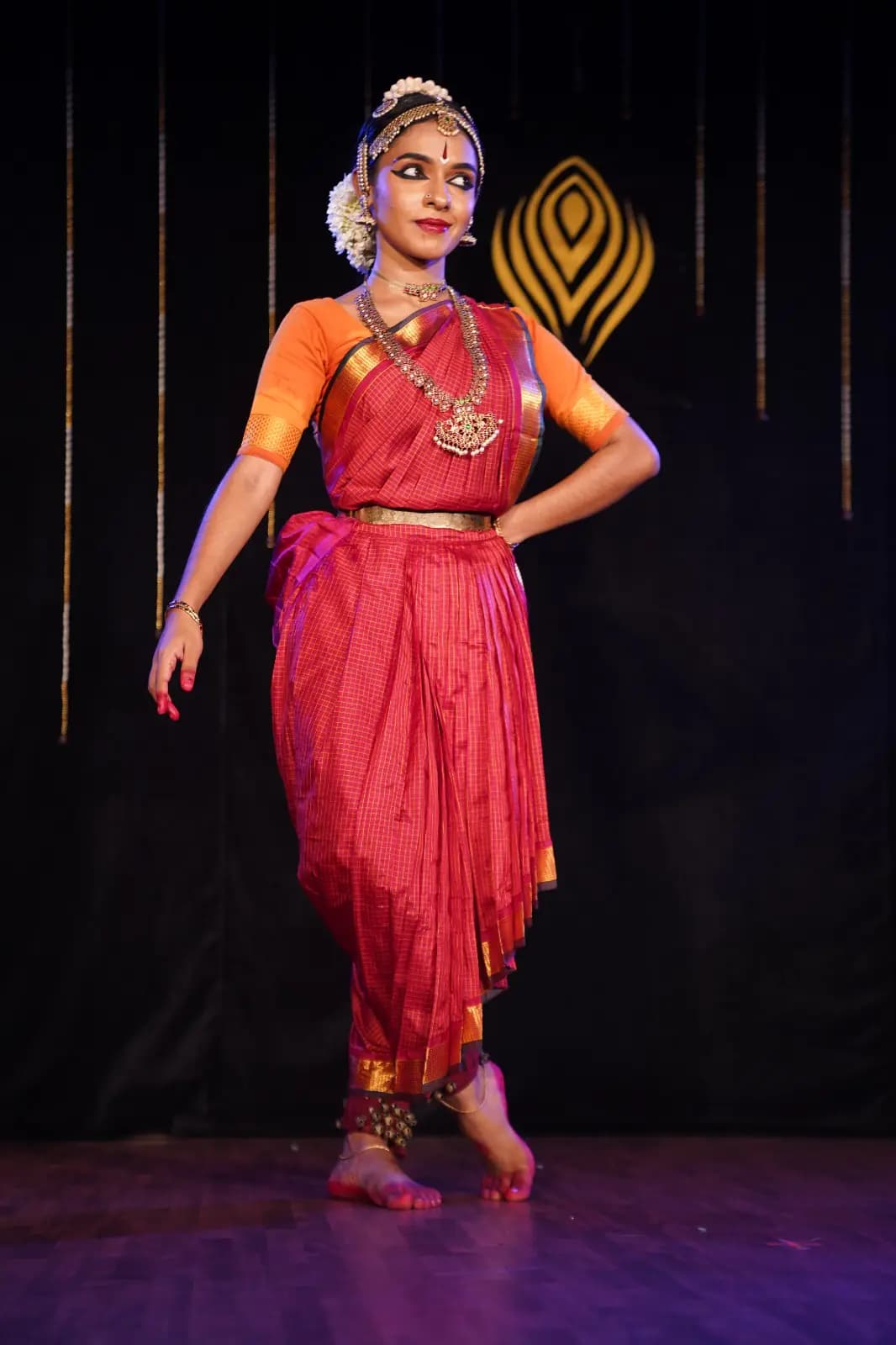
If adavus are the body of Bharatanatyam, abhinaya is its voice. Abhinaya is the storytelling layer of the dance - how a dancer reads a line of Sanskrit or Tamil poetry, breaks it apart, and re-presents it through gesture, gaze, posture, and emotion.
The four kinds of abhinaya
The Natya Shastra describes four kinds of abhinaya, each contributing a different layer to a performance:
- Angika - the body. Hand gestures, facial expressions, and body posture.
- Vachika - the voice. The sung or recited text the dancer interprets.
- Aharya - the costume, makeup, and ornament that signal the character.
- Sattvika - the inner emotional state that the dancer genuinely inhabits, which gives the performance its truth.
Why sattvika abhinaya is the hardest
A dancer can rehearse a hand gesture for a thousand repetitions and execute it cleanly. Sattvika abhinaya - the inner emotional state - cannot be faked the same way. The audience can feel the difference instantly. This is why senior teachers spend years on a single padam or javali: the gestures may settle in a few weeks, but the inner truth takes much longer to become honest.
Navarasa - the nine emotional flavours
Abhinaya draws on the navarasa - nine canonical emotional states that the dancer can inhabit: shringara (love), hasya (laughter), karuna (sorrow), raudra (anger), veera (heroism), bhayanaka (fear), bibhatsa (disgust), adbhuta (wonder), and shanta (peace). A skilled dancer can move between them within a single line of text, and the audience follows without effort.
How abhinaya is taught at Kalpa Arts
Abhinaya is introduced gradually, beginning with the navarasa exercises in the beginner programme and deepening through padams and javalis in the technique programme. The performance programme treats abhinaya as the centre of the work - a single line of poetry can occupy a class for an entire month, line by line, gesture by gesture.