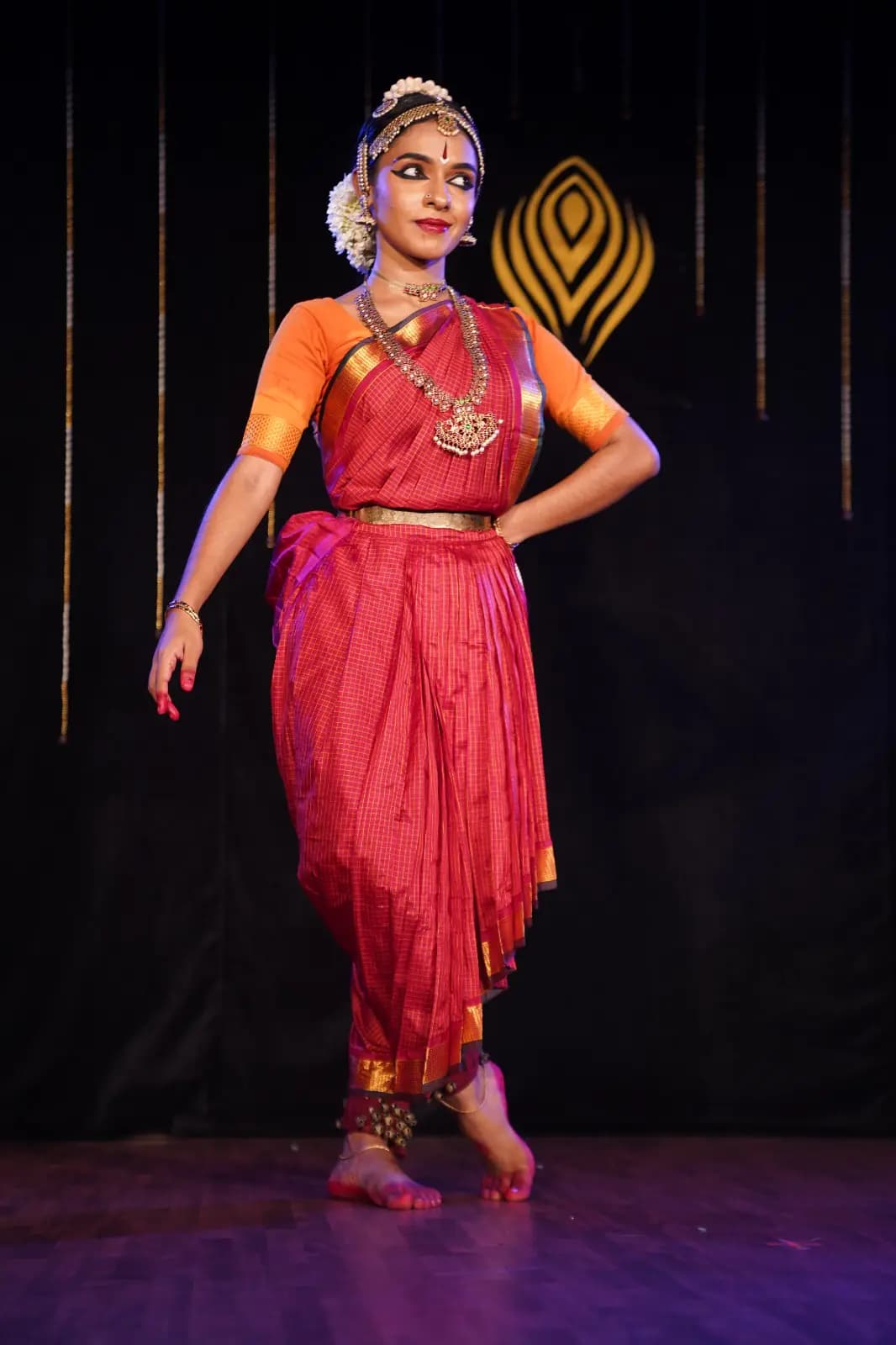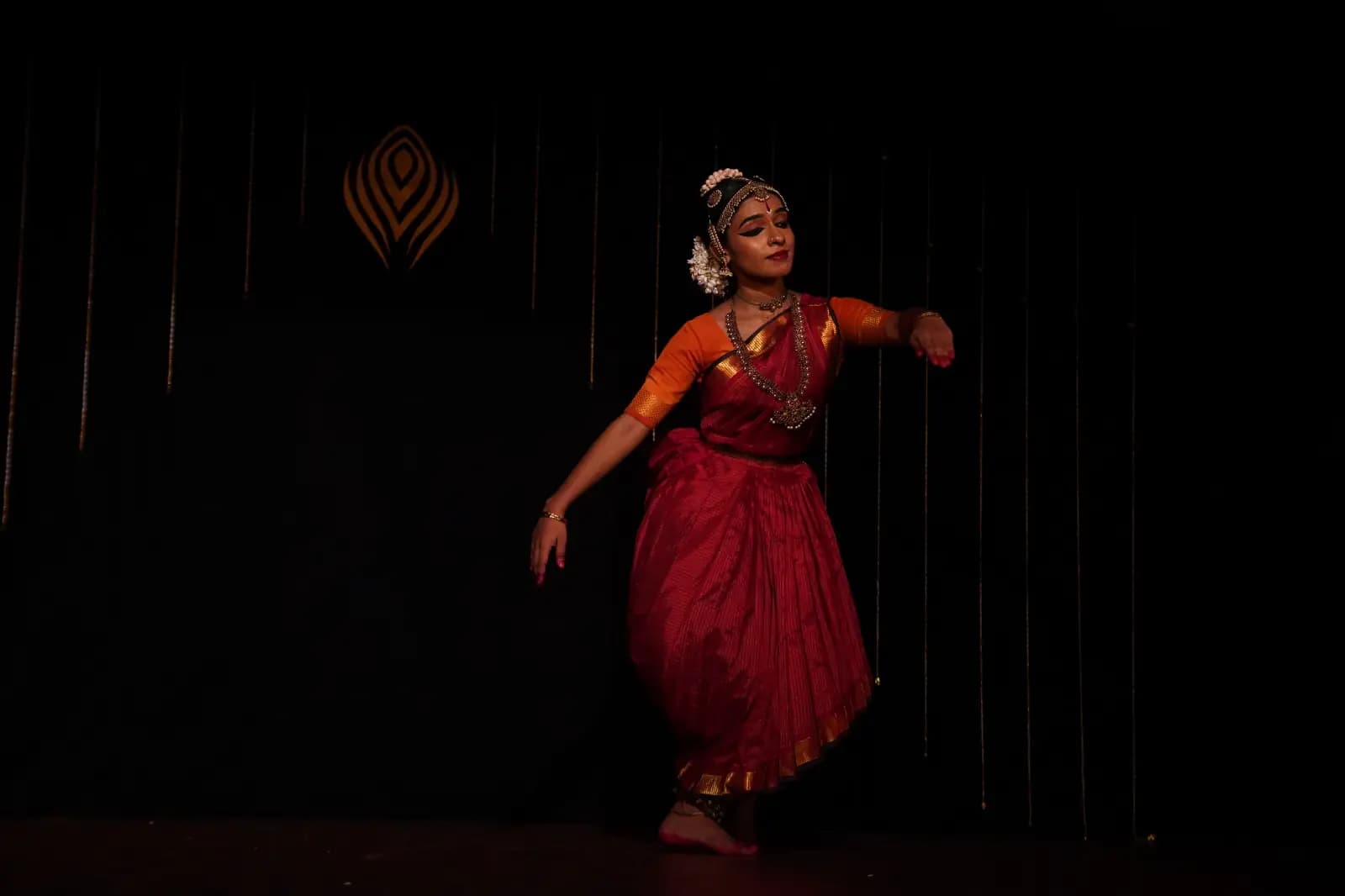
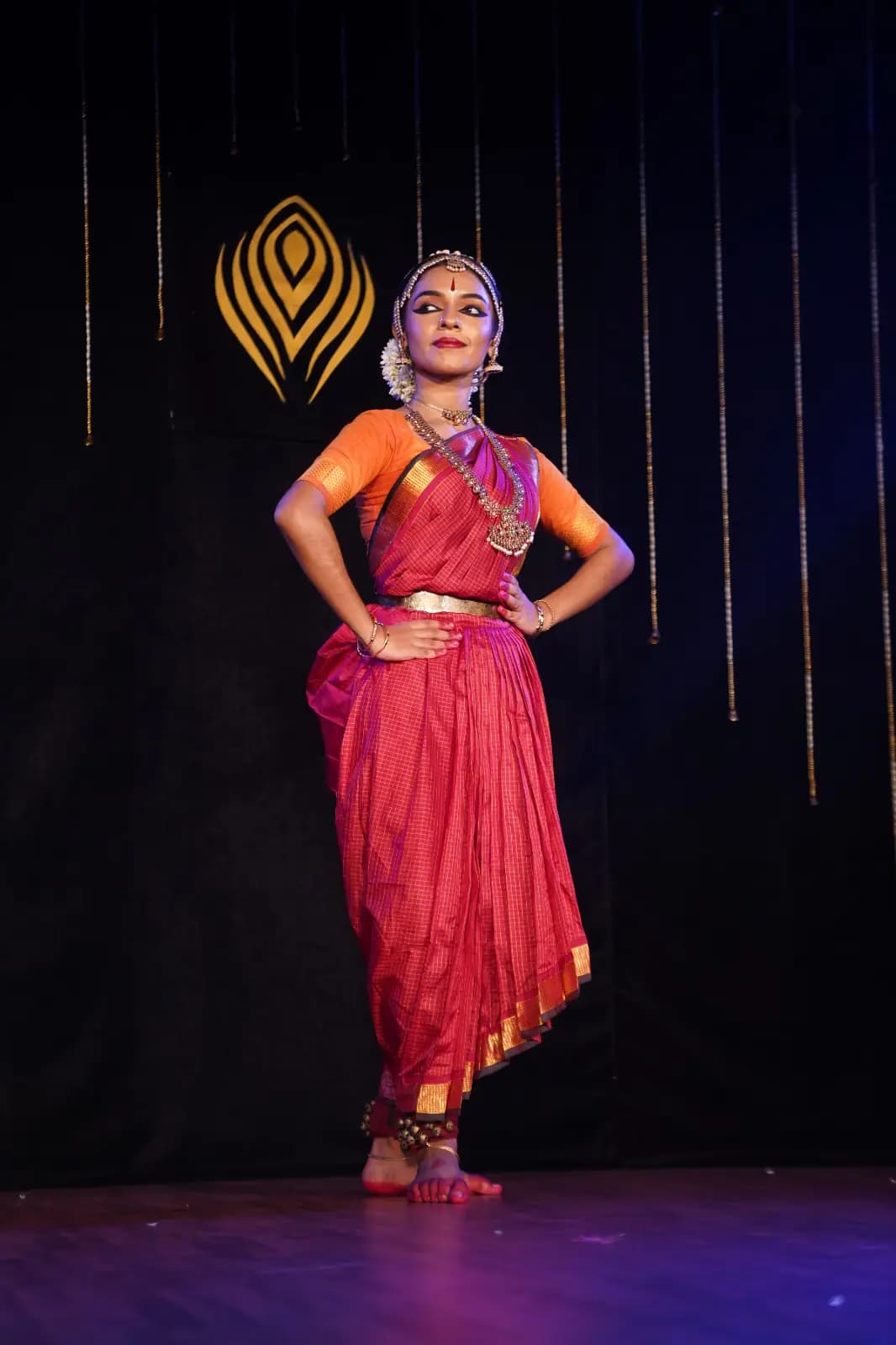
Adavus are the fundamental movement units of Bharatanatyam - the alphabet from which every step, every phrase, and every full item is built. A student does not learn dance and then learn adavus; the dance is the adavus, joined together with music and meaning.
What is an adavu?
An adavu is a single coordinated unit of stance, leg movement, arm movement, and rhythm. It carries its own jathi - a sequence of recited syllables that name the rhythm - and is repeated across multiple speeds and counts. Beginners learn adavus the way a musician learns scales: slowly, with attention to clean form, before stringing them into longer phrases.
How adavus are grouped
Most lineages classify adavus into nine numbered sets, though the exact count varies slightly between schools. The Kalakshetra tradition, on which Kalpa Arts is grounded, uses a structured progression that begins with stance work and gradually adds rhythmic, spatial, and expressive complexity.
- Tatta adavu - the first beat: foot strikes from aramandi.
- Natta adavu - leg extensions with measured stretch and recovery.
- Visharu adavu - flowing leg sweeps that introduce continuous movement.
- Tatti-mettu adavu - heel and toe articulation, rhythmically demanding.
- Sarukkal adavu - slides across the floor with controlled aramandi.
- Mandi adavu - half-sit work that builds the legs and core.
- Kuditta-mettu adavu - jumps with precise landings.
- Tirmana adavu - concluding flourishes used at the end of phrases.
- Korvai adavu - composite phrases that combine earlier sets.
Why beginners spend so long on the first set
The first set of adavus - tattadavu - looks the simplest and is the hardest to do well. The geometry of aramandi (the half-sit), the precise foot placement, the parallel knees, and the unwavering torso are all formed here. Almost every problem an advanced student has to unlearn later - a collapsing back, drifting feet, asymmetric hips - has its roots in a rushed first set.
The teacher's role in the first six months is to slow the student down. Bharatanatyam rewards patience earlier and more decisively than almost any other art form.
What practice looks like at home
Twenty minutes of careful daily practice produces more progress than two hours of unfocused work once a week. Beginners are encouraged to practice aramandi, basic foot positions, and jathi recitation by counting and clapping. Ankle bells (salangai) are introduced only once the basic adavus are confident.